

There are markets that grow quickly.
And there are markets that develop over the long term.
The difference rarely lies in numbers — but in people.
Capital doesn’t just follow returns.
Capital follows movement.
And the most stable movements arise where people not only arrive, but stay.
In many traditional investment regions, it’s often observed that capital arrives first: large-scale projects, infrastructure, marketing—and then attempts are made to generate demand. In some cases, this works. In many cases, however, it only creates short-term activity without any lasting commitment.
In other regions, the process is reversed.
People come first.
Not as tourists in the traditional sense, but as long-term visitors, second-home owners, entrepreneurs, remote workers, and investors. They spend time on-site, build relationships, and develop routines. They stay longer, return more frequently, and begin to understand the place as part of their lives.
Only then does capital follow in structured form.
This sequence is no coincidence. It’s a pattern observed in many successful markets. Sustained demand isn’t created through advertising, but through the quality of the environment. And quality of life arises from factors that can’t be staged in the short term: climate, landscape, safety, infrastructure, accessibility, cultural openness, and an environment that allows for both private retreat and business activity.
When people begin to spend regular time in one place, the structure of demand changes.
Visitors become repeat customers.
Repeat customers become owners.
Owners become multipliers.
They bring business partners with them, recommend the location, initiate projects, or invest themselves. Individual visits lead to the formation of networks. Networks develop into structures. And structures generate capital.
In this process, the length of stay plays a more significant role than the sheer number of visitors. A place where people only stay briefly generates fleeting revenue. A place where people return and invest time creates long-term value.
This dynamic is particularly crucial for entrepreneurs and investors with an international background. They are not looking for short-term trends, but for locations that remain relevant for years to come – places that offer both a high quality of life and space for discussions, planning, and collaboration.
In such environments, capital is not created abruptly, but gradually.
Initially, smaller projects are developed.
These are followed by more structured investments.
Finally, larger infrastructures emerge — hotels, services, networks, and services related to long-term stays.
The important thing is: This development is organic.
It doesn’t follow any single campaign, but rather the actual use of a place. The more a location is integrated into the everyday lives of its visitors, the more stable the demand becomes.
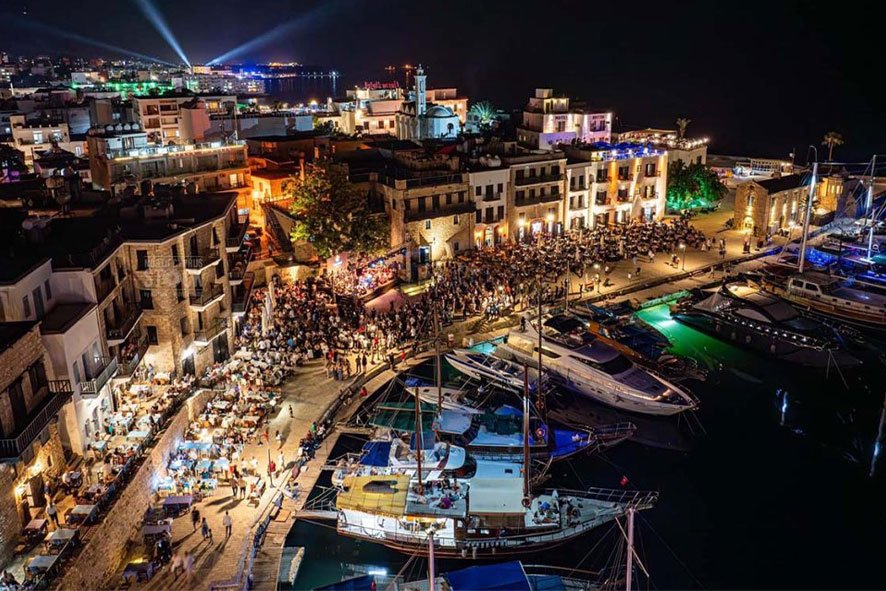
Northern Cyprus is currently in exactly such a phase.
The region is not primarily perceived through large advertising campaigns, but rather through personal experiences, recommendations, and repeat visits. Entrepreneurs, investors, and international buyers spend time there, build contacts, and begin to see the location as a complement to their existing places of residence.
This movement is quiet, but distinct.
It manifests itself in conversations on terraces, in meetings at the golf course, in recurring visits to the same cafés, in projects that initially emerge within small circles. It is a network of people who are not here by chance, but by choice.
This creates a special opportunity for investors.
A market where demand arises from genuine use has a different quality than a market driven solely by supply. Value creation here is based not on short-term attention, but on long-term presence.
This doesn’t mean that every location is automatically suitable. The analysis of location, infrastructure, operator quality, and legal framework remains crucial. However, the overarching trend—that capital flows to where people stay—provides an important context.
He explains why some regions experience stable growth over many years, while others lose momentum after a short time.
Perhaps this is the crucial difference between short-term markets and sustainable locations:
Some attract visitors.
Others keep people occupied.
And it is precisely where people stay that the kind of capital is created that not only invests but builds up for the long term.