

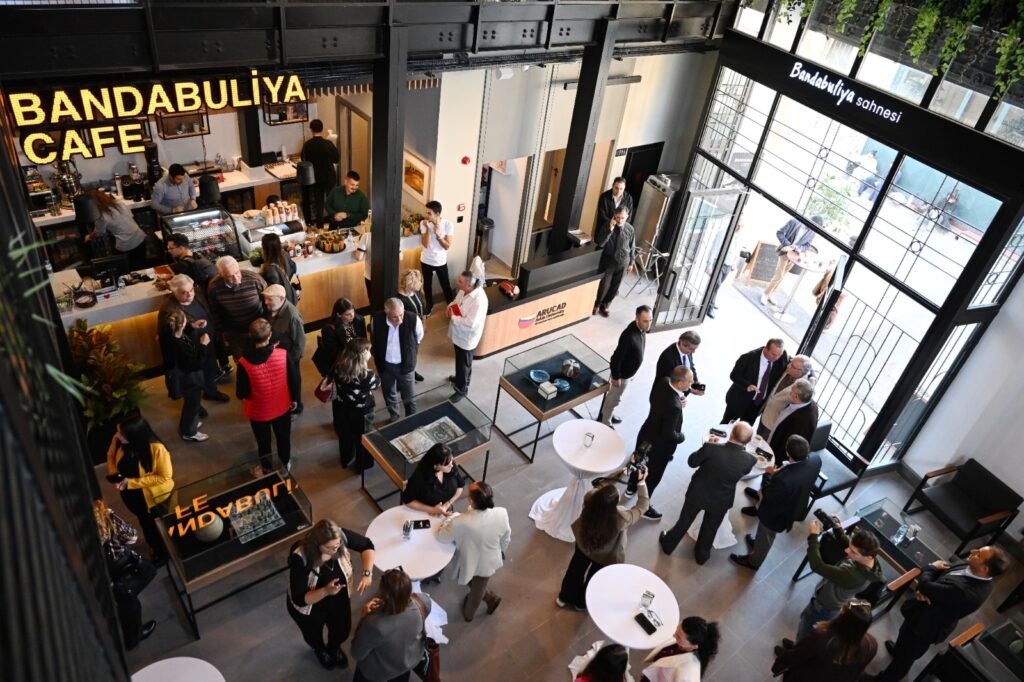
Why local market halls in Northern Cyprus are more than just places to shop
Not every place in a region is made for visitors.
Some are for everyday life.
For habits.
For encounters.
For routines.
In Northern Cyprus, this includes the so-called Bandabuliya – traditional market halls found in several cities on the island. They are not staged attractions, but functional spaces where daily life has taken place for generations.
What a Bandabuliya is
The term “Bandabuliya” describes a covered market hall where traders offer fresh produce, spices, cheese, olives, meat, fish and regional specialties.
Historically, these markets originated as central supply centers for cities. They concentrated trade, exchange, and social interaction in one place. They have retained this function to this day—even though the offerings, packaging, and organization have modernized over time.
Bandabuliya markets can be found in various cities in Northern Cyprus, including:
Kyrenia (Girne)
Famagusta (Gazimağusa)
Nicosia (Lefkoşa)
as well as in simplified form in smaller towns
Every market has its own character, shaped by its location, architecture, and the people who use it.
A place for everyday life – not for staging.
What distinguishes the Bandabuliya from modern supermarkets is less the product range than the way shopping is done.
Nothing happens anonymously here.
People talk to each other.
They ask about each other’s origins.
They try things out.
They receive recommendations.
The retailers know their products — and often their customers too. Quality is assessed directly, and prices are not only fixed but also part of a dialogue.
Shopping becomes an encounter.
This gives visitors a direct insight into the everyday life of the island — unfiltered and authentic.
Bandabuliya in Nicosia
The Bandabuliya in Nicosia (Lefkoşa) is particularly characteristic .
It is located in the historic part of the city, nestled among old alleyways, mosques, small cafes, and workshops. The building itself combines various architectural influences—Ottoman elements, British administrative structure, and local building styles converge here to create a functional yet atmospheric space.
Inside you will find:
fresh vegetables and fruit from the region
Olives in different varieties
Halloumi and local cheeses
Spices and herbs
fresh fish
traditional baked goods
But the Bandabuliya is not exclusively a place for food.
Between the stalls, you’ll also find handcrafted items and small works of art : handmade ceramics, textiles, decorative objects, and pieces by local artists. These elements add another dimension to the market. They connect practical everyday life with cultural expression and demonstrate that supply and creativity coexist here.
This creates a space where trade, craftsmanship and culture overlap.
Culinary arts as part of identity
The Bandabuliya demonstrates how strongly food on the island is linked to regional production.
Many products come from the immediate vicinity. Agriculture, fishing, and small businesses deliver directly to the markets. This proximity ensures quality—but also transparency.
You know where something comes from.
You often know the producer.
And you can taste the difference.
Typical products such as halloumi , olives , fresh herbs or traditional dishes such as molehiya are not just food, but part of the cultural identity.
Encounter as part of the system
For people who live on the island for a longer period of time or return regularly, the Bandabuliya quickly becomes a fixed part of the week.
You meet familiar faces.
You exchange ideas.
You learn the latest news.
The market hall thus fulfills a social function that has been lost in many modern cities.
It is not just a place to shop.
It is a place to connect.
Between tradition and the present
Although the Bandabuliya has a long history, it is not a static relic.
Modern products, new packaging, international influences, and changing consumer habits have left their mark here as well. At the same time, the core remains: personal exchange, regional quality, and open encounters.
This balance between tradition and development reflects the overall dynamism of Northern Cyprus.